
Funeral Services Resources
A Unified Mission: Honoring the Gift
As funeral directors, embalmers, arrangers, and caregivers, you are often called to serve as guides. You walk alongside families during some of the most difficult and emotional moments of their lives. When a family chooses donation for their loved one, or when that decision has been documented through Donate Life California, we are entrusted with helping honor that final act of generosity and ensuring the donor's legacy is treated with dignity and respect.
This is a shared mission.
OneLegacy and funeral professionals are united by a common purpose: honoring the donor while compassionately caring for the loved ones left behind. While that mission is clear, the path is not always simple. Logistics, timelines, communication, and unforeseen circumstances can present challenges. Yet every challenge offers an opportunity to strengthen collaboration rather than create conflict.
Strong partnerships between funeral homes and OneLegacy make all the difference. When we communicate openly, respect one another's expertise, coordinate effectively, and keep the family's wishes at the center of every decision, we create the best possible experience for everyone involved.
Most importantly, we ensure that the donor's final gift is honored in the most respectful and meaningful way possible.
Because, in the end, it is not only about what someone leaves behind. It is about the lives they save, the hope they inspire, and the enduring legacy of compassion they leave in their wake.
How Funeral Professionals Can Support the Mission
Educate FamiliesProvide accurate information about organ, eye, and tissue donation, including open-casket considerations and financial misconceptions. Never assume families have received complete information or fully understand the donation process.
Ask and Listen
When donation becomes part of the arrangement conversation, take time to understand the family's thoughts, emotions, and concerns. Offer reassurance when appropriate and connect them with OneLegacy professionals who can answer detailed questions.
Build Strong Relationships
Develop meaningful partnerships with OneLegacy's Funeral Home Liaison and donation professionals. Relationships established before donation-related services occur foster trust, improve communication, and help prevent misunderstandings during emotionally sensitive situations.
Be Flexible and Solution-Oriented
Delays and scheduling challenges can occur throughout the donation process. Approach these situations with patience, collaboration, and a commitment to finding solutions that honor both the donor and the family's needs.
Celebrate the Gift
Look for meaningful ways to recognize a donor's final act of generosity during services or memorialization. Through thoughtful words, symbols, acknowledgments, or tributes, families are often comforted by knowing their loved one created hope for others through donation.
Remember the Shared Purpose
Every donor deserves to be honored. Every family deserves compassionate care. By working together, OneLegacy and funeral professionals ensure that both occur with dignity, excellence, and respect.
Together, We Honor the Gift
Together, we honor the legacy.Together, we serve donor families.
Together, OneLegacy and funeral professionals ensure that every donor's final act of generosity is remembered, respected, and celebrated.
Organ and Tissue Donation Recovery Process
- Referral Call
- Eligibility Screening
- Consent and Authorization
- Recovery Planning and Transportation
- Organ and/or Tissue Recovery
- Post-Recovery Care
- Final Transportation
1. Referral Call
The hospital or other healthcare provider refers a potential donor to OneLegacy as soon as possible after death or when donation may be possible. Tissue exclusive referrals made from hospitals are made within one (1) hour of the patient's time of death. Referrals may come from hospitals, nursing homes, hospice facilities, emergency medical services, funeral homes, or coroner offices.
2. Eligibility Screening
OneLegacy reviews the donor's medical history and works with healthcare providers to determine eligibility for organ and/or tissue donation. If the patient is not eligible, the referral is closed and the family and hospital are notified that the patient is no longer a candidate for donation and may be released according to established protocols. (Approximately 30 minutes)
3. Consent and Authorization
If the patient is eligible, authorization for donation is confirmed through donor registration or discussions with the legal next of kin to discuss the opportunity for donation. Medical and social history information is collected to support the donation process. The timing of this step may vary depending on the availability of the legal next of kin. (Approximately 40 minutes to complete the required paperwork)
4. Recovery Planning and Transportation
Once authorization is obtained, OneLegacy coordinates the next steps. Depending on the type of donation, the donor may remain at the hospital or be transported to a OneLegacy Transplant Recovery Facility. Recovery teams review the donor's medical information and prepare for the recovery procedure. The surgical recovery team will perform a donor case review prior to the arrival of the donor. Once the donor arrives at a OneLegacy facility, a surgical recovery technician will confirm the identification of the donor and perform a visual donor assessment.
The goal is to coordinate transport to a OneLegacy facility within one (1) hour of receiving consent for tissue exclusive recovery.
5. Organ and/or Tissue Recovery
A specialized surgical recovery team performs the recovery procedure in a sterile operating room setting, treating the donor with dignity and respect throughout the process. Depending on donation opportunities, organs, tissues, or both may be recovered. Following recovery, reconstruction is completed to ensure the donor's appearance is suitable for funeral arrangements. The recovery process may take several hours depending on the type and number of gifts being recovered.
6. Post-Recovery Care
Recovered organs are transported to transplant centers for recipients in need. Recovered tissues are carefully packaged and sent to tissue processors, where they are prepared for future transplantation and therapeutic use.
7. Final Transportation
Upon completion of the recovery process, OneLegacy coordinates transportation to the family's chosen funeral home. Arrangements are made with the funeral director after the required release documentation has been received.
*Please note: This is a typical donation and recovery process. Timeframes and specific steps may vary based on each donor's circumstances and the type of donation.
The Centers for Medicare & Medicaid Services requires that hospitals report all deaths to OneLegacy.
Language Matters: Preferred Organ, Eye, and Tissue Donation Terminology
The language we use when discussing organ, eye, and tissue donation shapes understanding, builds trust, and reflects respect for donors, recipients, and their families. Using accurate, consistent, and person-centered terminology helps ensure clear communication, supports informed decision-making, and honors the gift of donation. This guide highlights preferred donation terminology that aligns with industry best practices and promotes respectful conversations throughout the donation process.
Donation Terminology
- Organs, tissues and corneas are "recovered" or "procured" not "harvested," "removed" or "taken."
- Organ, tissue and cornea donors are "deceased donors" or "donor heroes" not "cadavers" or "cadaveric donors."
- Brain death is death; it is permanent and irreversible. The individual is "clinically and legally deceased" not "in a coma," and they cannot "wake up."
- An individual who is brain dead will be on "mechanical support" but not "life support."
- Patients waiting for a lifesaving organ transplant are placed on the "national transplant waiting list."
- Hospitals where donation takes place are "donor hospitals." Hospitals where transplantation takes place are "transplant centers."
- Say "Minimal changes" vs. "No Visual Change(s)."
- Say "Minimal Delay" vs. "No Delay" for funeral arrangements.
Example: "Every effort will be made to minimize any visual change to the body or delay in the funeral arrangements." - Say "Delay" vs. "Hold" for tissue authorization.
Example "OneLegacy has placed a delay on the potential donor so we may contact the family for tissue donation." - Say "Viewing" vs. "Open casket."
Example "You may still view your loved one after donation." - Say "Donation" or "Gifts" vs. "Body Parts."
- Say "Passed" vs. "Expired."
Honoring the Gift of Life Through Memorialization
- Include Donate Life language and emblem in obituary.
- Donate Life lapel pins for pall/urn bearers.
- Donate Life lapel pins and bracelets for family and attendees.
- Display Donate Life magnet on the hearse.
- Raise Donate Life flag during the viewing/funeral.
- Fly the Donate Life flag during Donate Life Month.
Obituary Templates
ORGAN, TISSUE OR CORNEA DONORS
- Honoring [HIS/HER/THEIR] generous wish, the gift of life was shared with many people through organ, tissue and cornea donation.
- [NAME]'s final act of kindness was to give the gift of life through organ, tissue and cornea donation.
- [HE/SHE/THEY] was/were known as a giving person and, even in death, [HIS/HER/THEIR] giving continues as [HIS/HER/THEIR] donation of tissues will heal as many as 75 people.
- In keeping with [NAME]'s loving and generous spirit, it was [HIS/HER/THEIR] decision to donate life so that others may live.
- [NAME] gave in death as [HE/SHE/THEY] gave in life; [HE/SHE/THEY] was/were an organ donor.
- [NAME] gave the gift of life through organ, tissue and cornea donation.
- [HIS/HER/THEIR] corneas have restored sight
ORGAN, TISSUE OR CORNEA RECIPIENT
- [NAME] was an advocate for organ and tissue donation after receiving a transplant.
- [NAME] was a [ORGAN/TISSUE/CORNEA] recipient and a strong advocate for donation.
- Because of the gift of a [ORGAN/TISSUE/CORNEA] transplant, [NAME] was able to enjoy life with [HIS/HER/THEIR] family and friends.
- [NAME] shared many more years of life with [HIS/HER/THEIR] family and friends thanks to the generosity of an organ donor.
Gift Utilization
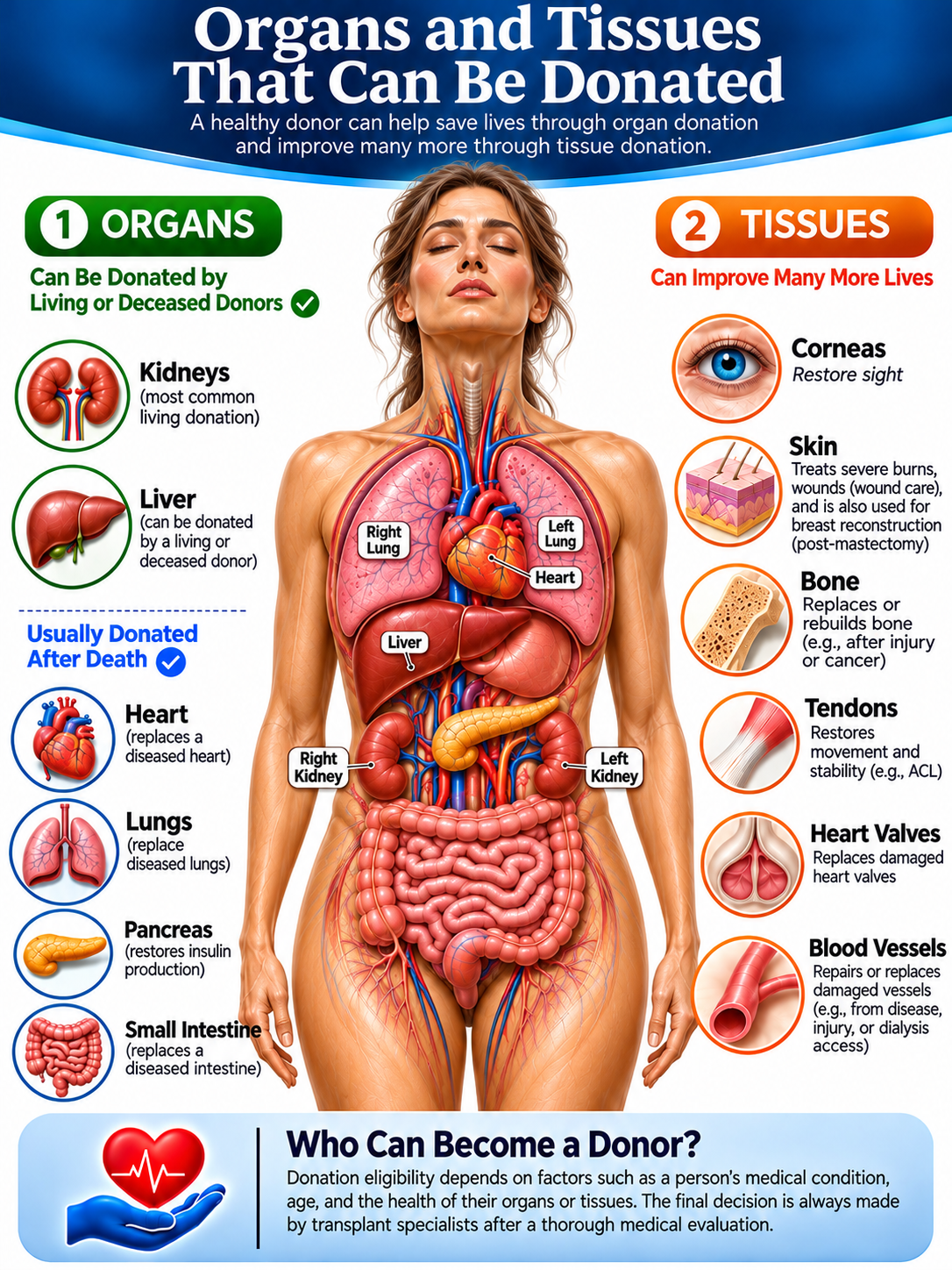
Funeral Home FAQs
“The donation conversation is not just about one question. It is not about “yes” or “no.” It is meant to be informative; the donation coordinator consults with the family about their donation options; they are trained to appropriately distribute education regarding donation and accurately answer any questions that the NOK may have. If you have not been formally trained by ONELEGACY in this capacity, you are not able to have this conversation with the family.”
“This conversation can only take place between a trained requestor from ONELEGACY and the NOK or legal authorizing agent per the Uniform Anatomical Gift Act (42 CFR § 482.45 Condition of Participation: Organ, Tissue, and Eye Procurement).
(C) When a hospital refers an individual at or near death to a procurement organization, the organization may conduct any reasonable examination necessary to ensure the medical suitability of a part that is or could be the subject of an anatomical gift for transplantation, therapy, research, or education from a donor or a prospective donor. During the examination period, measures necessary to ensure the medical suitability of the part may not be withdrawn unless the hospital or procurement organization knows that the individual expressed a contrary intent.
(G) Upon referral by a hospital under subsection (a), a procurement organization shall make a reasonable search for any person listed in Section 9 having priority to make an anatomical gift on behalf of a prospective donor. If a procurement organization receives information that an anatomical gift to any other person was made, amended, or revoked, it shall promptly advise the other person of all relevant information.
Contact Us
Questions related to payment status?
Contact Accounts Payable
AP@onelegacy.org
Questions related to donor location or transport status?
Contact Family Care Center
FCCAllocation@onelegacy.org
213.989.2442
Questions related to the donation process, donor integrity or funeral specific processes?
Contact Funeral Home Liaison, Tamela Mease-Van Vactor
Tmeasevanvactor@onelegacy.org
213.229.5659